Balcony Waterproofing Singapore: 10 Essential Things Every Property Owner Should Know
A beautiful balcony is one of the best parts of any home. It gives you fresh air, extra outdoor space, and a place to relax after a busy day. But there’s one problem many homeowners don’t think about until it’s too late—water leakage. That’s exactly why balcony waterproofing Singapore has become an essential service for HDB flats, condominiums, landed homes, and commercial buildings across the island.
Singapore’s tropical climate brings heavy rainfall, high humidity, and constant exposure to moisture. Over time, even the strongest balcony surfaces can develop cracks, loose tiles, or damaged waterproof membranes. And once water starts seeping through… repairs become much more expensive.
If you’re planning renovations or simply want to protect your property, this guide covers everything you need to know about balcony waterproofing Singapore.
Why Balcony Waterproofing Singapore Matters
Balconies are constantly exposed to rain and changing weather conditions. Unlike indoor flooring, they face direct sunlight, standing water, and temperature changes almost every day.
Without proper waterproofing, moisture slowly penetrates beneath tiles and concrete. At first, you might only notice small stains or damp patches. Later, those tiny issues can turn into peeling paint, mold growth, cracked flooring, or even leaks affecting your neighbors below.
That’s why investing in balcony waterproofing Singapore isn’t just maintenance—it helps prevent costly structural repairs in the future.
Common Signs Your Balcony Needs Waterproofing
Many homeowners don’t realize there’s already water damage until it becomes serious.
Keep an eye out for these warning signs:
- Water stains on ceilings below the balcony
- Cracked or loose floor tiles
- Damp walls near balcony doors
- Mold or mildew growth
- Paint bubbling or peeling
- Water pooling after rain
- Musty odors indoors
Even one of these symptoms can indicate that the waterproofing system has started to fail.
1. Waterproof Membranes Are Your First Line of Defense
The waterproof membrane sits underneath your balcony tiles and acts as a protective barrier against water infiltration.
Professional contractors usually install liquid-applied membranes, cementitious waterproofing, or polyurethane coatings depending on the balcony structure and usage.
Choosing the right membrane is one of the most important parts of balcony waterproofing Singapore, since different materials offer different levels of flexibility and durability.
2. Proper Surface Preparation Makes a Huge Difference
Many waterproofing failures happen because the surface wasn’t prepared correctly.
Before applying waterproof coatings, professionals clean the substrate, remove dirt, repair cracks, level uneven areas, and ensure the surface is completely dry.
Skipping this step may save time initially… but it often leads to premature failure.
3. Balcony Drainage Is Just as Important
Even the best waterproof membrane cannot compensate for poor drainage.
Balconies should always have a slight slope directing rainwater toward drainage outlets.
Standing water places continuous pressure on waterproof systems and increases the chances of leaks.
Good drainage dramatically extends the lifespan of waterproofing materials.
4. Tile Grout Isn’t Waterproof
Many people assume grout keeps water out.
It doesn’t.
Grout is water-resistant to some extent but remains porous. Water can slowly seep through tiny gaps and reach the concrete below.
Professional Balcony Waterproofing Singapore focuses on protecting the entire structure beneath the tiles—not just the visible surface.
5. Small Cracks Can Become Big Problems
Hairline cracks might not look serious.
But during heavy rain, water finds even the smallest openings.
Over months or years, these tiny cracks expand because of moisture, temperature changes, and structural movement.
Repairing them early is far cheaper than replacing damaged flooring later.
6. Different Waterproofing Systems Suit Different Balconies
Every balcony is unique.
Older HDB flats may require crack injection and membrane replacement.
Condominium balconies often benefit from polyurethane waterproof coatings.
Landed homes with rooftop balconies sometimes require additional UV-resistant protection because they’re exposed to direct sunlight throughout the day.
An experienced contractor will recommend the most suitable solution instead of using the same method everywhere.
7. Professional Leak Testing Saves Future Headaches
After waterproofing work is completed, professionals usually perform flood testing or water ponding tests.
The balcony is intentionally filled with water for several hours to confirm there are no leaks before tiles are installed or the project is considered complete.
It’s a simple step—but it provides valuable peace of mind.
8. Regular Maintenance Extends Waterproofing Life
Waterproofing isn’t something you install once and forget forever.
Routine inspections help identify small issues before they become major repairs.
Simple maintenance includes:
- Cleaning drainage outlets
- Removing leaves and debris
- Replacing damaged grout
- Repairing cracked sealants
- Checking expansion joints
These small tasks can significantly increase the lifespan of your waterproofing system.
9. Choosing Experienced Contractors Really Matters
Not all waterproofing services deliver the same quality.
Look for contractors with experience handling HDB, condominium, and landed property projects.
A reliable company should inspect the site thoroughly, explain the cause of the leak, recommend suitable materials, and provide workmanship warranties where available.
When comparing quotations, don’t focus only on price. Experience, material quality, and proper installation often provide better long-term value.
10. Waterproofing Is More Affordable Than Major Repairs
Some homeowners delay waterproofing because they believe it’s expensive.
Ironically, postponing repairs usually costs much more.
Water damage may eventually affect ceilings, walls, electrical wiring, furniture, and neighboring units.
Early balcony waterproofing Singapore services help prevent these larger expenses while protecting your property’s value.
It’s one of those maintenance jobs you rarely regret doing early.
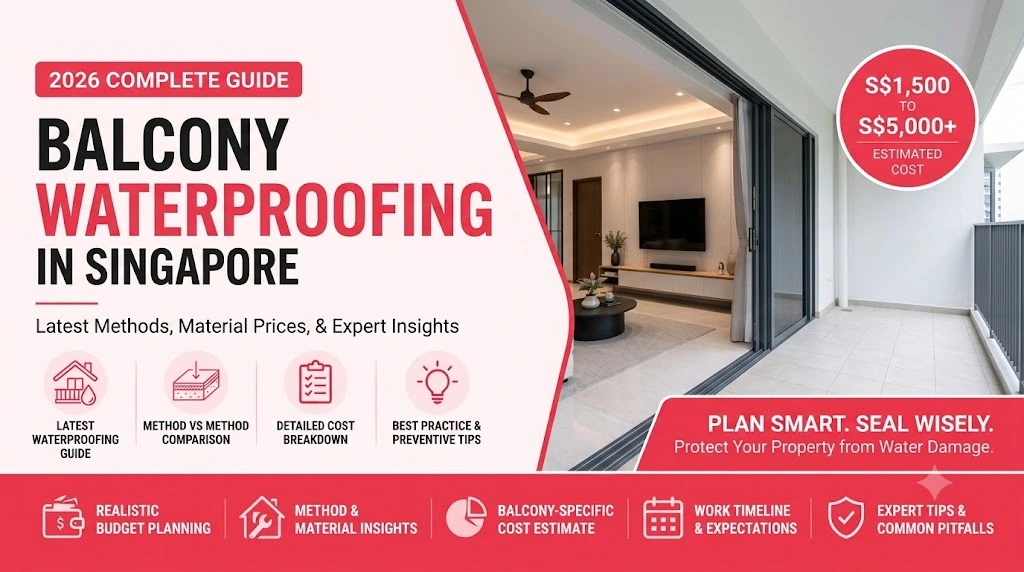
How Much Does Balcony Waterproofing Singapore Cost?
The total cost depends on several factors, including:
- Balcony size
- Existing water damage
- Waterproofing material selected
- Tile removal requirements
- Labor complexity
- Accessibility
Simple waterproof coating projects generally cost less than complete membrane replacement involving tile hacking and reconstruction.
Obtaining multiple quotations helps homeowners compare solutions and understand what’s included in each proposal.
How Long Does Balcony Waterproofing Singapore Last?
A professionally installed waterproofing system can typically last between 5 and 15 years, depending on the material used, installation quality, weather exposure, and maintenance.
Regular inspections and timely repairs can extend its lifespan even further.
It’s always easier—and cheaper—to maintain waterproofing than replace an entire damaged balcony.
Conclusion
Living in Singapore means dealing with frequent rain and high humidity throughout the year. That’s simply part of life. But water damage doesn’t have to be.
Investing in balcony waterproofing Singapore protects your home from leaks, mold, structural deterioration, and expensive repairs. Whether you’re renovating an older property or maintaining a newer one, proper waterproofing provides long-term peace of mind. And honestly… it’s one of the smartest preventive investments any homeowner can make.
Frequently Asked Questions (FAQs)
1. Why Balcony Waterproofing Singapore is important?
Singapore experiences frequent rainfall and high humidity, making balconies highly vulnerable to water penetration. Waterproofing prevents leaks, mold, and structural damage.
2. How often should balcony waterproofing be replaced?
Most waterproofing systems last between 5 and 15 years, depending on the materials used and maintenance.
3. Can Balcony Waterproofing Singapore be done without removing tiles?
In some cases, yes. Certain waterproof coatings can be applied over existing tiles, although severe damage may require tile removal for proper repairs.
4. What causes balcony leaks?
Common causes include cracked tiles, damaged waterproof membranes, poor drainage, deteriorated grout, and structural movement.
5. How can I tell if my Balcony Waterproofing Singapore has failed?
Signs include water stains, mold growth, peeling paint, damp walls, loose tiles, musty smells, and water leaking into lower floors.
6. Is professional waterproofing better than DIY solutions?
Yes. Professional contractors have the expertise, specialized materials, and testing methods needed to ensure long-lasting waterproof protection.