
What Most Homeowners Get Wrong About Renovation Permit Singapore
Buying a home is exciting. Renovating it is even more exciting. Then reality hits. Your contractor asks about permits. Someone tells you HDB approval is needed. A friend says you can start work immediately. Another warns you about fines if you renovate without approval.
Suddenly, something that looked simple becomes confusing.
If you’re planning a renovation permit Singapore application, you’re not alone. Thousands of homeowners every year struggle to understand what requires approval, how long it takes, and whether their contractor is handling everything correctly.
This guide breaks everything down in plain English. By the end, you’ll know exactly when permits are required, how the process works, and the mistakes that cost Singapore homeowners time and money.
What Is a Renovation Permit Singapore and Why Does It Matter?
A renovation permit Singapore is official authorization required before certain renovation works can begin.
For HDB flats, permits are issued by the Housing & Development Board (HDB). Certain structural, bathroom, window, plumbing, and alteration works require approval before construction starts.
The purpose is simple:
- Protect structural safety
- Prevent damage to shared building systems
- Maintain fire safety standards
- Protect neighboring units
- Ensure waterproofing remains intact
Without approval, homeowners may face:
- Stop-work orders
- Mandatory reinstatement
- Additional costs
- Delays to renovation projects
HDB specifically regulates renovation works that may affect safety, waterproofing, or building integrity.
Think of permits like building insurance before the work starts.
A little paperwork now can save thousands later.
Which Renovation Works Require a Renovation Permit Singapore?
This is the question every homeowner asks first.
Not every renovation requires approval.
However, some works definitely do.
Common Works That Usually Require Approval
These include:
- Wall demolition
- Wall alteration works
- Bathroom and toilet modifications
- Certain floor replacement works
- Window replacement works
- Structural alterations
- Air-conditioner installation works under specific conditions
- Plumbing modifications
- Sanitary pipe works
HDB publishes detailed renovation guidelines showing which building works require permits and which do not.
Works That Often Do Not Require Approval
Examples include:
- Painting
- Wallpaper installation
- False ceilings (subject to conditions)
- Built-in carpentry
- Wardrobes
- Kitchen cabinets
- Decorative wall finishes
However, even when permits are not required, homeowners must still follow HDB renovation guidelines.
The Golden Rule
If the work affects:
- Structure
- Waterproofing
- Plumbing
- Shared building components
Always verify permit requirements before work begins.
HDB Renovation Permit Singapore Requirements for Flat Owners
Most Singapore homeowners live in HDB flats.
That means HDB renovation rules matter.
One of the biggest misconceptions is that homeowners personally submit permits.
In reality, contractors usually handle the application process.
HDB Registered Contractor Requirement
For renovation works requiring approval, homeowners should engage contractors listed in the Directory of Renovation Contractors (DRC).
These contractors understand:
- HDB renovation guidelines
- Permit procedures
- Safety requirements
- Documentation standards
Using a contractor unfamiliar with HDB requirements can create unnecessary delays.
Documents Usually Required
Depending on the work scope:
- Owner details
- Floor plans
- Renovation specifications
- Contractor information
- Supporting technical documents
Applications are submitted electronically through HDB systems.
HDB Renovation Guidelines Every Homeowner Should Know
Many renovation problems happen because owners focus only on design.
The rules matter just as much.
Bathroom Restrictions
One major rule surprises many BTO owners.
For newly completed HDB developments, bathroom floor and wall finishes are protected during an initial restriction period to prevent waterproofing failures.
Ignoring this can create approval issues.
Wall Hacking Rules
Not every wall can be removed.
Some walls are:
- Structural walls
- Load-bearing elements
- Critical building components
Before hacking any wall, approval and verification are necessary.
Window Works
Window replacement is heavily regulated.
Only approved contractors can perform certain window-related works.
This rule exists because poorly installed windows create safety risks.
Noise Restrictions
Renovation activities are also subject to noise control requirements.
These rules help reduce disruption for neighbors and maintain community living standards.
Condo Renovation Permit Singapore Requirements
Many homeowners assume condo renovations are easier.
Not always.
Condominiums operate differently from HDB flats.
MCST Approval
Most condominiums require approval from the Management Corporation Strata Title (MCST).
This may include:
- Renovation deposits
- Work schedules
- Contractor registration
- Lift protection requirements
- Insurance documentation
Structural Alterations
Major alterations may also require:
- Qualified Person (QP) involvement
- Engineering assessments
- Additional regulatory approvals
Certain structural works may require Building and Construction Authority (BCA) approval.
Always check your condo’s renovation handbook before committing to contractors.
Renovation Approval Timeline: How Long Does It Take?
One of the most common homeowner questions is:
“How fast can I get approval?”
The answer depends on the renovation scope.
Simple Renovations
For straightforward applications:
- Review may take only a few days
- Documentation requirements are limited
Complex Projects
Projects involving:
- Structural changes
- Bathroom alterations
- Significant building works
typically require longer review periods.
What Delays Approvals?
Common causes include:
- Missing documents
- Incorrect floor plans
- Contractor errors
- Incomplete submissions
- Non-compliant proposals
The easiest way to avoid delays is ensuring your contractor reviews all requirements before submission.
Common Renovation Permit Singapore Mistakes
After working with homeowners for years, contractors see the same mistakes repeatedly.
Starting Work Too Early
Some owners assume approval is automatic.
It isn’t.
Wait until permits are approved before work begins.
Hiring the Cheapest Contractor
Low quotations sometimes come from contractors unfamiliar with compliance requirements.
A cheaper quote can become expensive later.
Assuming Interior Designers Handle Everything
Some interior designers coordinate permits.
Others don’t.
Always ask.
Never assume.
Ignoring Existing Building Rules
Condo management regulations and HDB guidelines still apply even if your contractor says otherwise.
Not Keeping Documentation
Maintain records of:
- Permit approvals
- Contractor agreements
- Floor plans
- Renovation specifications
You’ll thank yourself later if questions arise.
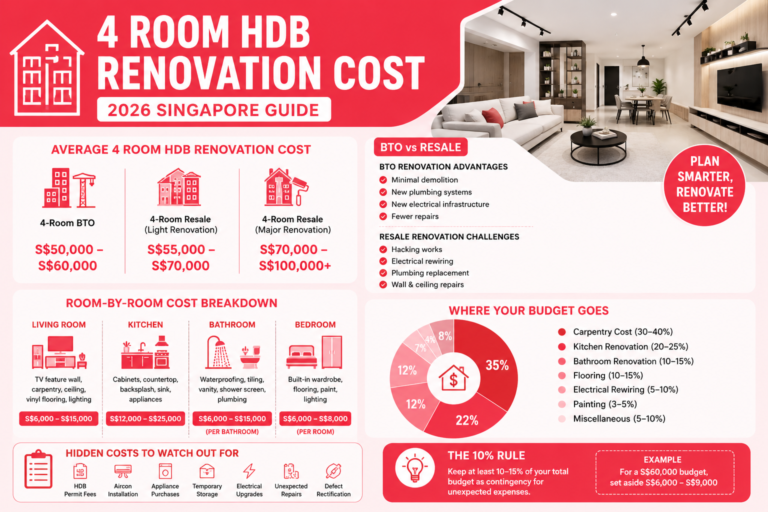
Renovation Costs and Permit Considerations
Many homeowners focus on renovation costs.
They forget compliance costs.
Direct Costs
You may encounter:
- Permit application fees
- Administrative charges
- Contractor compliance costs
Indirect Costs
These often matter more:
- Project delays
- Reinstatement costs
- Corrective works
- Additional inspections
According to Singapore renovation industry guides, permit compliance should be treated as part of the renovation budget rather than an optional expense.
The cheapest renovation isn’t always the most affordable in the long run.
How to Apply for a Renovation Permit Singapore
Here’s a simple framework.
Step 1: Define Your Renovation Scope
List every planned renovation item.
Include:
- Flooring
- Plumbing
- Carpentry
- Wall works
- Electrical works
Step 2: Verify Permit Requirements
Check official HDB renovation guidelines or consult your contractor.
Step 3: Engage Qualified Contractors
For HDB flats, verify contractors through the Directory of Renovation Contractors.
Step 4: Submit Application
Applications are generally submitted electronically through official channels.
Step 5: Await Approval
Do not start work prematurely.
Step 6: Complete Renovation According to Approved Plans
Changes after approval may require additional submissions.
A Simple Checklist Before Renovation Starts
Before signing any renovation contract, confirm:
✓ Permit requirements verified
✓ Contractor credentials checked
✓ HDB registered contractor used where necessary
✓ MCST approval obtained (for condos)
✓ Floor plans reviewed
✓ Budget includes compliance costs
✓ Timeline includes approval period
✓ Noise restrictions understood
✓ Documentation stored safely
✓ Approval received before work begins
This checklist alone can prevent most renovation headaches.
1. Do all renovations require a permit in Singapore?
No. Many cosmetic works such as painting, wallpaper installation, and basic carpentry typically do not require permits. However, structural, plumbing, bathroom, and certain alteration works often require approval.
2. Who applies for a renovation permit Singapore?
In most HDB renovation projects, the contractor submits the permit application on behalf of the homeowner through official systems.
3. Can I hack a wall without approval?
No. Wall hacking may affect structural safety and often requires assessment and approval. Always verify requirements before any demolition work begins.
4. What happens if I renovate without approval?
Authorities may require work to stop, request reinstatement of unauthorized works, or impose additional compliance requirements.
5. How long does a renovation permit Singapore approval take?
Approval timelines vary depending on the project scope, documentation quality, and type of renovation. Simple applications may be processed quickly, while more complex projects can require additional review.
Conclusion
Getting a renovation permit Singapore approval isn’t the most exciting part of renovating your home, but it’s one of the most important.
Whether you’re upgrading a BTO flat, renovating a resale HDB unit, or refreshing a condominium, understanding permit requirements helps you avoid delays, penalties, and costly mistakes.
The smartest homeowners don’t wait until demolition starts to think about compliance. They plan early, verify requirements, and work with experienced contractors who understand Singapore’s renovation regulations.
Before your renovation begins, spend an hour reviewing the official guidelines and confirming permit requirements. That small step could save weeks of delays and thousands of dollars later.