Good Secondary Schools in Singapore: Schools, COP & Fees to Compare
After PSLE results are released, many parents start comparing secondary schools in Singapore and wondering which options are worth considering. Good secondary schools in Singapore aren’t defined by COP alone. Academic programmes, CCAs, school culture, location and a student’s interests can all shape the school experience. Some families may prioritise strong academic pathways, while others may look for sports, arts, bilingual education or specialised programmes. Popular choices include schools such as Raffles Institution, Hwa Chong Institution, Nanyang Girls’ High School and Victoria School. COP, school fees and programme options can help narrow the choices, while your child’s PSLE score, interests and preferred pathway can guide the final shortlist.
TL;DR: Which Secondary Schools Are Worth Considering?
There is no single official ranking of good secondary schools in Singapore. Popular choices include schools known for strong academics, Integrated Programme (IP), SAP, CCAs and specialised programmes. COP and school fees can help narrow your shortlist, but they should not be the only factors. Your child’s PSLE score, interests, preferred pathway and daily commute should also shape the final school choices.
Good Secondary Schools in Singapore at a Glance
There isn’t a single order that places these schools from “best” to “least best”. Each has areas that may appeal to different students, so it’s more useful to look at what each school is known for before making a shortlist.
| School | Main Strength | Programme | Suitable For |
| Raffles Institution | Academic & leadership | IP | Students with strong academic interests |
| Hwa Chong Institution | Academic & bilingual education | IP/SAP | Students interested in academics and languages |
| Nanyang Girls’ High School | Academic & student development | IP/SAP | Academically strong girls |
| Raffles Girls’ School | Academic programmes | IP | Girls with strong academic interests |
| Dunman High School | Bilingual & academic programmes | IP/SAP | Students interested in academics and languages |
| Catholic High School | Academics & student development | IP/SAP | Boys looking for broad opportunities |
| Victoria School | Academics & CCAs | IP | Boys interested in all-round development |
| Methodist Girls’ School | Academics & programmes | IP | Girls looking for varied opportunities |
For families comparing good secondary schools in Singapore, the table is a starting point rather than a fixed ranking. Raffles Institution and Hwa Chong Institution are well known for demanding academic pathways, while SAP options such as Hwa Chong, Nanyang Girls’ High School and Dunman High School may suit students interested in bilingual education. Other schools stand out through their CCAs, leadership opportunities or wider student programmes.
But school reputation alone shouldn’t decide the shortlist. Check the latest programme details, admission information, COP and school fees, then consider how well each option matches your child’s PSLE score, interests and preferred secondary school experience.
Which Good Secondary Schools Are Known for Different Strengths?
Different students look for different things in a secondary school, so a useful shortlist can start with the area that matters most to your child. Here are some schools and pathways worth comparing.
For Strong Academic Programmes
Raffles Institution, Hwa Chong Institution, Raffles Girls’ School and Nanyang Girls’ High School are established choices for students who enjoy academic study and want access to demanding programmes. Their IP pathways can also provide a direct route through secondary and pre-university education.
For Bilingual Education
Students interested in Chinese language and bilingual education can consider Hwa Chong Institution and Dunman High School, along with other SAP schools in Singapore. These schools offer programmes that place greater emphasis on language learning and cultural education.
For Strong CCAs & Student Development
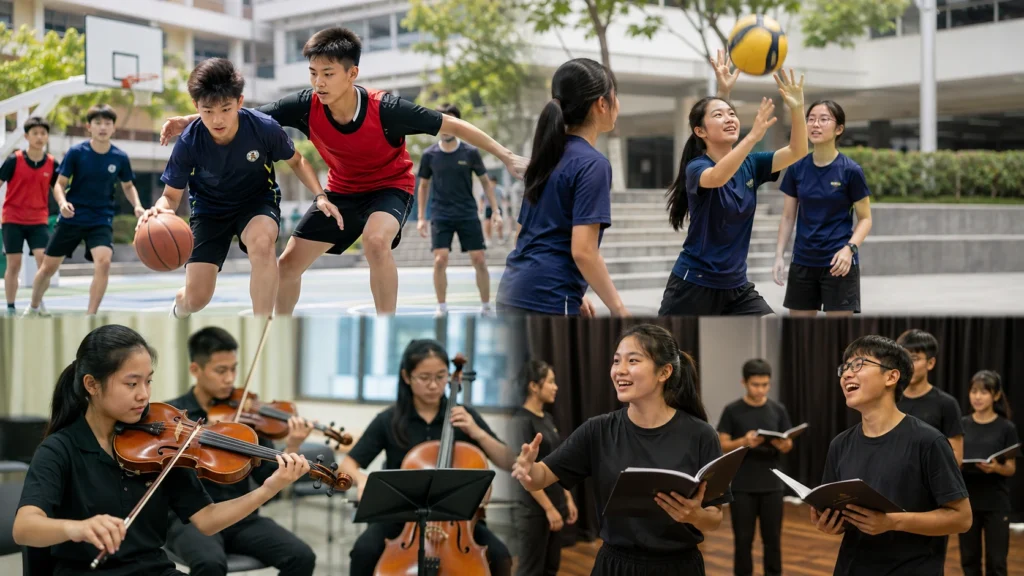
Victoria School, Methodist Girls’ School and Catholic High School offer students opportunities to develop interests outside the classroom through school CCAs, sports, arts, leadership and other activities.
For Specialised Interests
Students with a clear interest in science, technology, arts or sports can look beyond mainstream options. NUS High School of Mathematics and Science, School of Science and Technology, School of the Arts and Singapore Sports School each have a more specialised focus. These can be worth considering when a student already has a strong area of interest.
Secondary School COP: How Competitive Are These Schools?
A secondary school’s COP (cut off point) shows the PSLE score of the last student admitted during the previous Secondary 1 Posting Exercise. It’s useful when comparing school choices, but it isn’t a fixed admission score for the next cohort. MOE also states that a school’s current-year COP is only known after that year’s S1 Posting has ended.
| School | Recent COP | Programme |
| Raffles Institution | Check latest MOE figure | IP |
| Hwa Chong Institution | Check latest MOE figure | IP/SAP |
| Nanyang Girls’ High School | Check latest MOE figure | IP/SAP |
| Raffles Girls’ School | Check latest MOE figure | IP |
| Dunman High School | Check latest MOE figure | IP/SAP |
| Victoria School | Check latest MOE figure | IP |
For parents comparing secondary school COP in Singapore, the main thing is to treat past figures as a guide rather than a promise. COP can move from one year to the next as the PSLE results and school choices of each cohort change. MOE’s SchoolFinder publishes previous score ranges for reference.
Your PSLE score is only one part of the decision. School choice order and the available places also matter during posting, so it’s sensible to include a mix of schools rather than filling every choice with highly competitive options. And don’t assume that the school with the lowest secondary school cut off point is automatically the best fit. Programme choices, CCAs, school culture and location still deserve a place in the comparison.
Secondary School Fees in Singapore: What Should Parents Budget For?
Secondary school fees in Singapore vary based on the school type and the student’s citizenship. Government and government-aided schools generally follow MOE fee structures, while independent and specialised schools may have different charges. Parents should also allow for miscellaneous expenses such as uniforms, books, transport, meals and CCA-related costs.
| School Type | Typical Cost Consideration |
| Government | MOE school fees + miscellaneous charges |
| Government-aided | School fees + school-specific charges |
| Independent | Higher school fees may apply |
| Specialised | Depends on the school and programme |
For an accurate secondary school cost estimate, check the latest MOE school fees and the school’s own fee information. Financial assistance or subsidies may also be available for eligible families, so the headline fee should not be the only figure used when planning the budget.
What PSLE Score Do You Need for a Good Secondary School?
There is no single PSLE score that guarantees entry to a good secondary school in Singapore. The score range you have can guide your shortlist, but past COP figures are only a reference because admission outcomes can change each year.
| PSLE Situation | Shortlisting Approach |
| Very strong AL score | Consider highly competitive schools alongside realistic options |
| Mid-range AL score | Compare schools with suitable past COP ranges |
| Higher AL score | Focus on realistic choices, programmes and school fit |
| Specific talent | Consider DSA-Sec alongside the S1 Posting route |
A student with a strong PSLE score may have more options among schools with competitive COPs, while a higher AL score calls for closer attention to realistic school choices. But the score alone shouldn’t decide the shortlist. Check the school’s programmes, CCAs, culture, location and admission requirements too. For students with strengths in sports, arts, leadership or other areas, DSA-Sec may also offer another route into participating secondary schools.
IP, SAP or Specialised School? Which Pathway Fits?
Singapore secondary schools offer different pathways, so the best option can depend on what your child enjoys and where they want to develop further. A quick comparison can make the differences easier to see.
| Pathway | Best For |
| IP | Students interested in an integrated academic pathway |
| SAP | Students interested in bilingual and Chinese language programmes |
| Autonomous | Students looking for distinctive programmes and school strengths |
| Specialised | Students with strong interests or talents in specific areas |
The Integrated Programme (IP) combines secondary and pre-university education in participating schools, while SAP schools place a stronger focus on bilingual education and Chinese language. Students taking Higher Mother Tongue may also find SAP options relevant to their interests.
Specialised schools are more focused on particular areas, such as mathematics and science, technology, the arts or sports. And for students in mainstream secondary schools, Full Subject-Based Banding gives greater flexibility in taking subjects at different levels, including G1, G2 and G3. This can matter when comparing the academic structure and subject options available at each school.
5 Things to Check Before Shortlisting a Secondary School
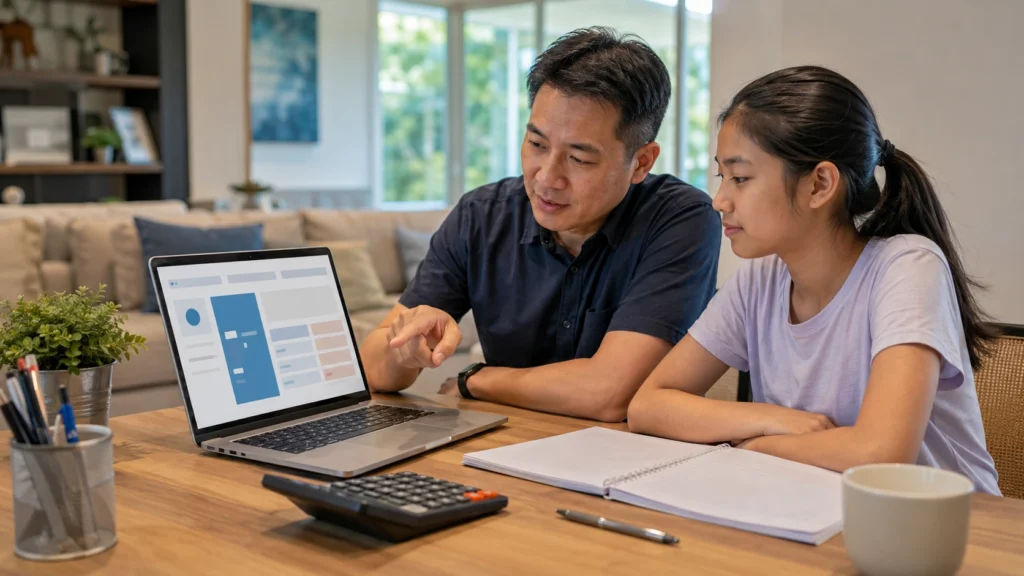
A school can look attractive on paper, but a closer check can reveal whether it suits your child’s needs and daily routine. Before finalising your secondary school choices, look at these five points.
1. Recent COP
Check previous COP figures to see how competitive admission has been. Treat them as a reference, not a guaranteed score.
2. Programme Choices
Look at IP, SAP, ALP, LLP and available subject options. Pick programmes that match your child’s interests and academic plans.
3. CCA Strength
Check the school’s sports, arts, clubs and leadership opportunities, especially if your child already has a strong interest.
4. Location
A long daily commute can affect sleep, study time and after-school activities. Check the actual travel time from home.
5. School Fit
Look at the school culture, student support and overall environment. Your child should feel comfortable with the school’s expectations and activities.
FAQs About Good Secondary Schools in Singapore
What are the good secondary schools in Singapore?
Well-regarded options include Raffles Institution, Hwa Chong Institution, Nanyang Girls’ High School, Raffles Girls’ School, Dunman High School, Catholic High School and Victoria School. But the best shortlist should also reflect your child’s PSLE score, interests, preferred programmes and school location.
Which secondary schools have strong academic programmes?
Raffles Institution, Hwa Chong Institution, Raffles Girls’ School and Nanyang Girls’ High School are known for strong academic programmes. Dunman High School and Catholic High School are also popular options for students looking for established academic pathways.
Is a lower COP better?
Not necessarily. A lower COP generally indicates that a school was more competitive in a previous S1 Posting Exercise. It does not automatically mean the school offers a better experience or is a better match for every student.
Are independent schools more expensive?
They can be. Independent schools may have different fee structures from government schools, so parents should check the latest school fees and additional charges before making a choice.
Can DSA-Sec help students enter a good secondary school?
Yes. DSA-Sec gives eligible students an alternative admission route based on talents or strengths such as sports, performing arts, leadership and other areas. The participating school’s criteria and selection process apply.
Making Your Shortlist
A good secondary school shortlist doesn’t need to be long. Use a simple Compare → Shortlist → Verify process:
- Compare: Check COP, programmes, CCAs and school fees.
- Shortlist: Match realistic schools with your child’s PSLE score, interests and preferred pathway.
- Verify: Check the latest information on MOE SchoolFinder and each school’s official website before submitting your Secondary 1 choices.
Conclusion
Good secondary schools in Singapore differ in what they offer, from strong academic programmes and IP pathways to bilingual education, CCAs and specialised areas. COP can help you judge how competitive a school may be, while fees, location and school culture give you a clearer picture of the day-to-day fit. Start with your child’s PSLE score and interests, compare a few realistic options, then verify the latest admission and programme details before making your Secondary 1 choices.