
Budget Renovation Singapore: 12 Smart Ways to Transform Your Home Without Overspending
Renovating a home in Singapore doesn’t always mean spending tens of thousands of dollars. In fact, plenty of homeowners are discovering that a beautiful, functional living space can be achieved without blowing the budget.
The secret? It’s not about choosing the cheapest materials or skipping everything you want. It’s about making smarter decisions.
Whether you’re renovating a newly collected BTO flat, refreshing an older HDB apartment, or giving your condo a modern makeover, a well-planned Budget Renovation Singapore can deliver impressive results.
Here’s how to stretch every dollar while still creating a home you’ll love coming back to.
1. Set a Realistic Budget Renovation Singapore First
Before looking at tiles, paint colors, or kitchen designs, decide how much you’re actually comfortable spending.
Many homeowners make the mistake of collecting renovation ideas first and calculating costs later. That’s usually when budgets spiral out of control.
Instead, divide your budget into categories like:
- Carpentry
- Flooring
- Painting
- Electrical works
- Plumbing
- Furniture
- Lighting
- Emergency buffer (around 10–15%)
Having a spending plan keeps every renovation decision grounded.
2. Prioritize What Truly Needs Renovating
Not every part of your home requires a complete makeover.
Ask yourself:
- Does this improve functionality?
- Is it only for appearance?
- Can it wait until later?
For example:
Instead of replacing perfectly good floor tiles, consider polishing them.
Instead of rebuilding kitchen cabinets, repaint or re-laminate the doors.
Small choices like these save thousands.
3. Keep the Existing Layout
One of the biggest renovation expenses in Singapore comes from hacking walls and relocating plumbing or electrical systems.
Changing:
- Kitchen layouts
- Bathroom positions
- Water pipes
- Electrical points
can quickly increase renovation costs.
Keeping your original layout makes renovation much more affordable—and often much faster too.
4. Choose Affordable Materials That Still Look Premium
Expensive doesn’t always mean better.
Many modern renovation materials offer the same elegant appearance at a much lower cost.
Popular budget-friendly options include:
- Vinyl flooring instead of hardwood
- Quartz alternatives
- Laminate countertops
- Ceramic tiles instead of natural stone
- MDF cabinets with quality laminate finishes
Most visitors won’t even notice the difference.
Your wallet definitely will.
5. Renovate in Stages
Here’s something many homeowners overlook.
You don’t have to complete everything at once.
Consider renovating in phases:
Phase 1
- Flooring
- Painting
- Electrical work
Phase 2
- Kitchen upgrades
Phase 3
- Bedroom carpentry
Phase 4
- Decorative improvements
This approach spreads out expenses and reduces financial pressure.
6. Refresh Instead of Replace
Sometimes your existing furniture just needs a little attention.
Instead of buying:
- New wardrobes
- New cabinets
- New tables
consider:
- Repainting
- Wrapping with vinyl
- Changing handles
- Replacing hinges
- Installing new lighting
These simple upgrades often make older furniture look almost brand new.
7. Compare Multiple Renovation Quotations
Never accept the first quotation.
Different renovation contractors may charge significantly different prices for almost identical work.
Request at least three to five quotations.
Compare:
- Material specifications
- Warranty
- Project timeline
- Hidden charges
- Payment schedule
Sometimes the cheapest quotation isn’t actually the most affordable after additional costs appear later.
8. Focus on High-Impact Areas
If money is limited, spend it where people notice most.
Usually that’s:
- Living room
- Kitchen
- Bathroom
- Entrance area
Fresh paint, modern lighting, and stylish flooring in these spaces dramatically improve the overall feel of the home.
Bedrooms can often be upgraded later.
9. Don’t Overspend on Built-In Carpentry
Built-in furniture looks fantastic—but it’s also one of the most expensive renovation components.
Ask yourself whether every cabinet truly needs to be custom-made.
Freestanding furniture often costs far less while offering flexibility if you move homes in the future.
Many modern furniture collections look just as stylish as custom carpentry.
Sometimes even better.
10. Use Simple Interior Design Themes
Minimalist designs aren’t just trendy.
They’re budget-friendly too.
Simple design styles generally require:
- Fewer decorative elements
- Less custom carpentry
- Simpler lighting
- Cleaner finishes
Popular affordable styles include:
- Scandinavian
- Modern Minimalist
- Japandi-inspired
- Contemporary
Clean lines never really go out of style.
11. Spend More on What Lasts Longer
Budget Renovation Singapore doesn’t mean buying the cheapest everything.
Some items deserve a larger share of your budget because replacing them later becomes expensive.
These include:
- Waterproofing
- Plumbing
- Electrical wiring
- Bathroom fittings
- Kitchen hardware
Saving money on hidden essentials often becomes much more expensive down the road.
Choose quality where durability matters.
12. Leave Room for Unexpected Costs
Every renovation seems to uncover at least one surprise.
Maybe damaged pipes.
Maybe uneven flooring.
Or hidden electrical issues.
That’s why experienced homeowners always reserve around 10–15% of their renovation budget as a contingency fund.
Hopefully you won’t need it.
But if you do… you’ll be glad it’s there.
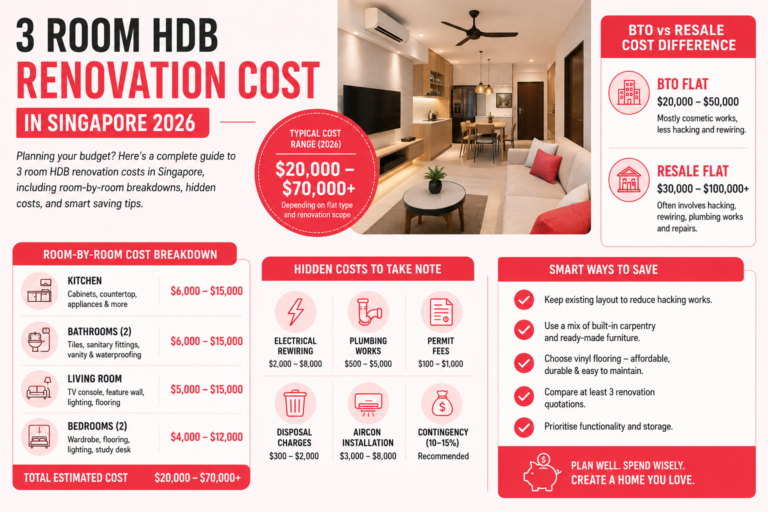
Average Costs Budget Renovation Singapore
Although every project is different, these general estimates provide a useful starting point.
| Property Type | Estimated Budget Renovation Singapore Cost |
|---|---|
| 2-Room BTO | SGD 15,000–25,000 |
| 3-Room HDB | SGD 20,000–35,000 |
| 4-Room HDB | SGD 30,000–50,000 |
| 5-Room HDB | SGD 40,000–65,000 |
| Executive Apartment | SGD 50,000–80,000 |
| Condominium | SGD 30,000–70,000 |
Actual costs depend on renovation scope, materials, contractor rates, and customization.
Common Budget Renovation Singapore Mistakes to Avoid
Even careful planners sometimes overspend.
Here are a few common mistakes:
- Starting work without a detailed budget
- Changing designs midway through renovation
- Ignoring hidden costs
- Hiring solely based on the lowest quote
- Buying trendy materials that require expensive maintenance
- Forgetting to budget for furniture and appliances
- Not checking warranty coverage
A little planning upfront usually prevents expensive surprises later.
How to Save Even More During Renovation
A few practical tricks can help reduce renovation costs even further.
Consider:
- Buying lighting separately during sales
- Reusing doors if they’re still in good condition
- Keeping existing bathroom layouts
- Choosing open shelving instead of upper cabinets
- Shopping during warehouse promotions
- Mixing built-in furniture with ready-made pieces
- Painting walls instead of installing feature panels
Tiny savings here and there add up surprisingly fast.
Is Budget Renovation Singapore Worth It?
Absolutely.
A Budget Renovation Singapore isn’t about making your home look cheap. It’s about spending wisely.
Many beautifully renovated Singapore homes achieve a premium appearance simply by focusing on smart layouts, practical materials, and thoughtful design choices rather than expensive finishes.
And honestly… that’s often the better approach.
Your home should reflect how you live, not how much you spend.
Frequently Asked Questions (FAQs)
1. How much does a Budget Renovation Singapore Cost?
A Budget Renovation Singapore typically costs between SGD 15,000 and SGD 50,000, depending on the property type, renovation scope, materials used, and whether you choose custom or ready-made furnishings.
2. What is the cheapest way to renovate a home in Singapore?
The most affordable approach is to keep the existing layout, repaint walls, choose cost-effective materials like vinyl flooring, refurbish existing cabinets, and prioritize essential upgrades over cosmetic changes.
3. Can I renovate my HDB flat on a small budget?
Yes. Many HDB homeowners successfully renovate within a limited budget by focusing on essential improvements, comparing contractor quotations, and avoiding unnecessary structural changes.
4. How can I reduce renovation costs without sacrificing quality?
You can save money by using durable yet affordable materials, renovating in phases, reusing existing fixtures where possible, and investing in quality for long-term essentials such as plumbing, electrical work, and waterproofing.
5. Is it better to renovate everything at once or in stages?
If your budget is limited, renovating in stages is often the smarter option. It allows you to spread costs over time while completing the most important areas first.
6. What are the biggest expenses in a Singapore home renovation?
Built-in carpentry, kitchen renovations, bathroom upgrades, flooring, and structural alterations are usually the most expensive parts of a renovation project.
7. How many renovation quotations should I get before choosing a contractor?
It’s recommended to obtain at least three to five quotations from different contractors. Comparing prices, materials, warranties, and timelines helps you find the best overall value.
8. Is a Budget Renovation Singapore worth it?
Yes. A well-planned Budget Renovation Singapore can significantly improve your home’s functionality, comfort, and appearance without unnecessary spending. Smart planning and practical design choices often deliver results that look just as impressive as high-end renovations.
Final Thoughts
A successful Budget Renovation Singapore comes down to planning, prioritizing, and making informed choices. You don’t need the biggest renovation budget to create a stylish, comfortable home. Focus on improvements that enhance daily living, compare quotations carefully, and invest in quality where it matters most.
The best renovations aren’t always the most expensive—they’re the ones that balance functionality, aesthetics, and long-term value. With the right strategy, even a modest renovation budget can completely transform your space into a home that feels fresh, modern, and uniquely yours.