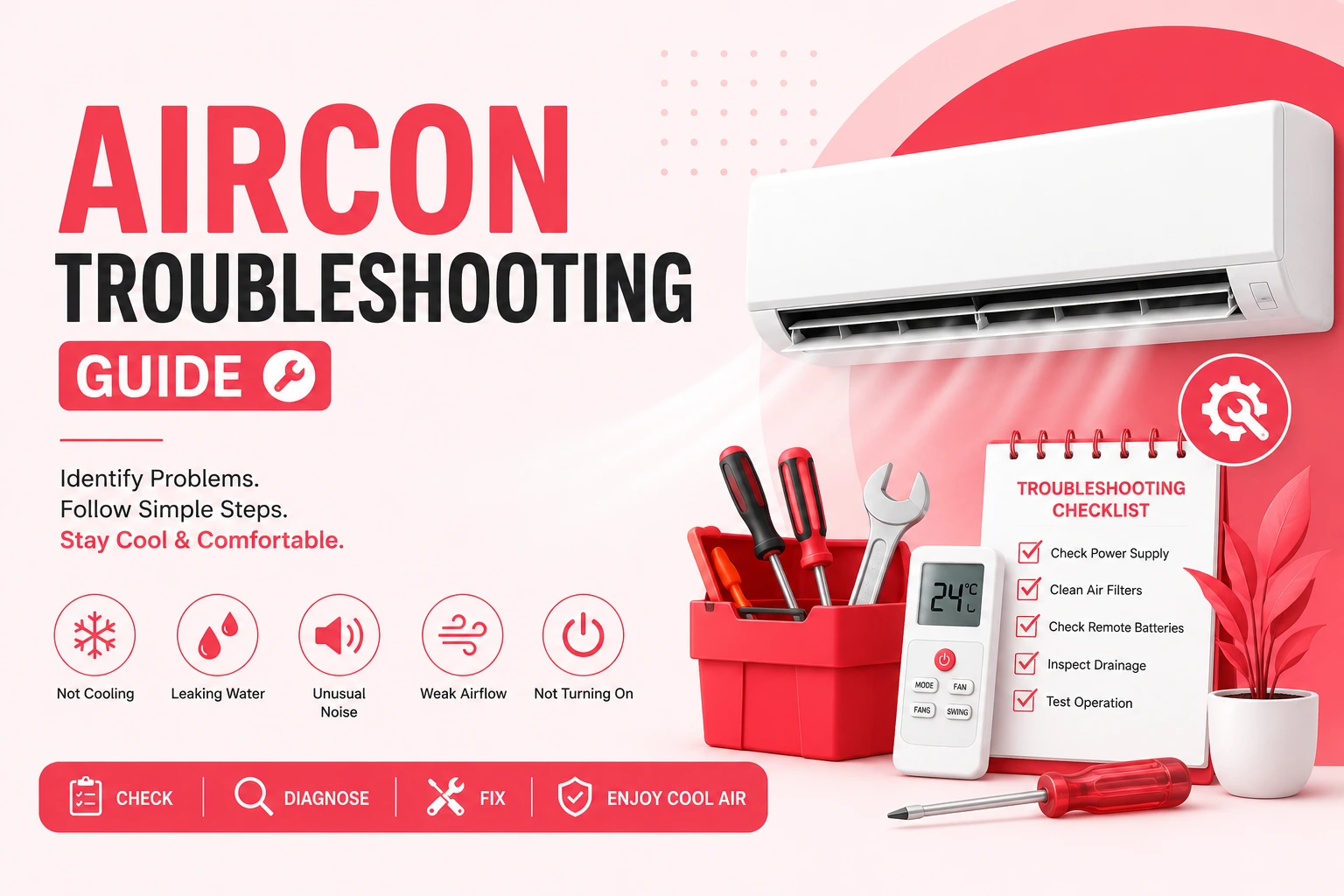
Aircon Troubleshooting Guide: Simple Ways to Fix Common Air Conditioner Problems
An aircon troubleshooting guide can save you time, money, and a lot of frustration. There’s nothing worse than switching on your air conditioner during a hot afternoon only to realize it isn’t cooling properly. Maybe it’s making strange noises. Maybe it’s leaking water. Or maybe it refuses to start at all.
The good news? Not every air conditioner problem needs an expensive repair. Sometimes, the solution is surprisingly simple. This aircon troubleshooting guide walks you through the most common issues, what causes them, and what you can safely check before calling a technician. Let’s get started.
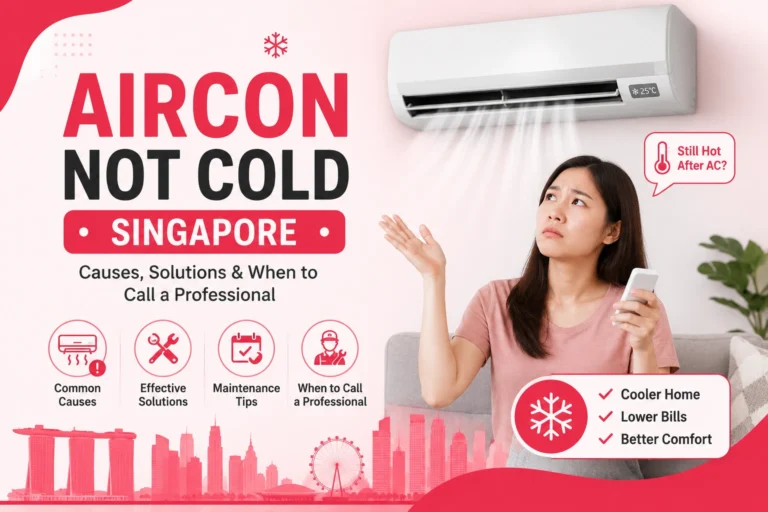
1. Air Conditioner Is Not Cooling Properly
The most common reason people search for an aircon troubleshooting guide is poor cooling performance.
If cool air isn’t coming out as expected, don’t panic just yet. Check the thermostat settings first. Make sure the temperature is set lower than the current room temperature.
Next, inspect the air filter. A dirty filter blocks airflow, making your unit work much harder while producing less cooling.
Also check whether doors and windows are closed. Even a small opening can let warm air enter continuously.
Sometimes that’s all it takes.
2. Air Conditioner Won’t Turn On
Another reason homeowners need an aircon troubleshooting guide is when the unit simply refuses to start.
Start by checking the power supply.
Look for:
- A switched-off circuit breaker
- Loose power plugs
- Dead remote control batteries
- Incorrect timer settings
If everything seems normal and the air conditioner still doesn’t respond, there could be an electrical issue requiring professional inspection.
3. Weak Airflow From the Indoor Unit
Weak airflow usually indicates something restricting air movement.
This aircon troubleshooting guide recommends checking:
- Dirty air filters
- Blocked air vents
- Dust-covered evaporator coils
- Faulty indoor fan motor
Cleaning the filters alone often restores normal airflow within minutes. It’s one of the easiest maintenance tasks you can do yourself.
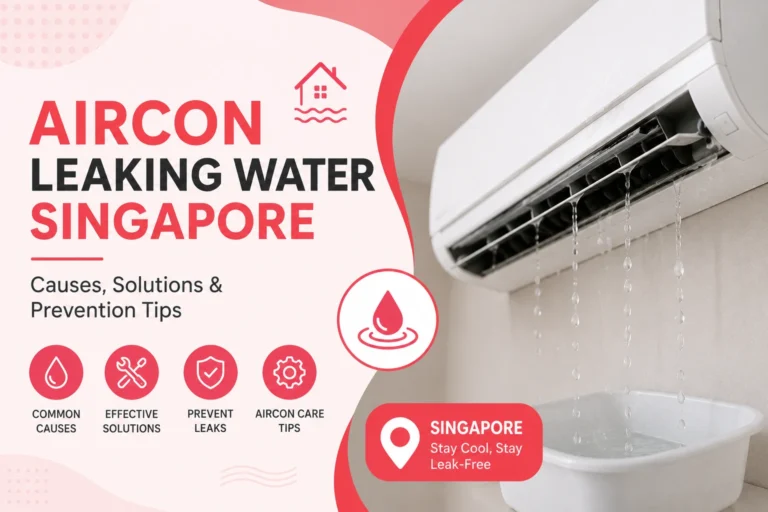
4. Water Leaking From the Air Conditioner
Water dripping indoors can look alarming…but it’s actually a common problem.
An aircon troubleshooting guide often points to these possible causes:
- Clogged drainage pipe
- Frozen evaporator coil
- Dirty filters
- Improper installation angle
Turn the unit off immediately if water continues leaking to avoid damaging nearby furniture or flooring.
5. Strange Noises During Operation
Air conditioners should operate quietly.
If yours suddenly starts producing unusual sounds, this aircon troubleshooting guide suggests identifying the type of noise.
Buzzing may indicate electrical issues.
Clicking can signal relay problems.
Rattling often means loose screws or internal components.
Grinding noises usually require immediate professional attention because motor components may be wearing out.
Ignoring strange sounds rarely makes them disappear.
6. Bad Smells Coming From the Unit
Nobody wants unpleasant odors blowing throughout the house.
This aircon troubleshooting guide explains that musty smells usually come from mold growing inside the indoor unit due to moisture buildup.
Burning smells may indicate electrical problems and should never be ignored.
Cleaning filters and scheduling regular servicing usually eliminate odor-related issues before they become worse.
7. Air Conditioner Keeps Turning On and Off
Short cycling is another issue covered in every reliable aircon troubleshooting guide.
Possible reasons include:
- Dirty air filters
- Incorrect thermostat placement
- Refrigerant issues
- Oversized air conditioning system
Frequent cycling increases electricity bills while placing unnecessary stress on important components.
8. Frozen Indoor Coil
Finding ice inside your air conditioner may seem strange, especially during hot weather.
An aircon troubleshooting guide identifies several possible causes:
- Restricted airflow
- Dirty filters
- Low refrigerant
- Faulty blower fan
Turn off cooling mode and allow the ice to melt completely before restarting the system.
If freezing happens repeatedly, professional servicing is recommended.
9. Outdoor Unit Isn’t Working
Sometimes the indoor unit operates while the outdoor condenser remains silent.
This aircon troubleshooting guide recommends checking:
- Circuit breaker
- Outdoor disconnect switch
- Debris around condenser
- Fan obstruction
Leaves, dust, and outdoor debris can reduce efficiency significantly over time.
10. Air Conditioner Uses Too Much Electricity
High energy bills often signal hidden problems.
A practical aircon troubleshooting guide recommends:
- Cleaning filters monthly
- Closing curtains during hot afternoons
- Keeping thermostat at efficient temperatures
- Scheduling yearly maintenance
- Cleaning outdoor condenser regularly
Small maintenance habits often produce surprisingly noticeable savings.
Preventive Maintenance Tips
The best aircon troubleshooting guide isn’t only about fixing problems—it also helps prevent them.
Here are a few habits worth following:
- Clean filters every two to four weeks.
- Keep indoor vents unobstructed.
- Remove leaves and dirt from the outdoor unit.
- Schedule professional servicing once or twice a year.
- Listen for unusual sounds before they become expensive repairs.
And honestly…preventive maintenance almost always costs less than emergency repairs.
When Should You Call an Aircon Technician?
Although this aircon troubleshooting guide covers many common issues, some situations require professional help.
Contact a qualified technician if you notice:
- Refrigerant leaks
- Burning electrical smell
- Compressor failure
- Repeated circuit breaker trips
- Continuous water leakage
- Complete cooling failure after basic troubleshooting
Attempting advanced repairs without proper equipment can create bigger problems—and sometimes safety risks too.
Why Regular Aircon Maintenance Matters
Following an aircon troubleshooting guide regularly helps your air conditioner stay efficient throughout the year.
Routine maintenance improves airflow, keeps indoor air cleaner, reduces energy consumption, and extends the lifespan of expensive components.
It also minimizes unexpected breakdowns during the hottest months when repair appointments can become difficult to book.
A little attention every few weeks really does make a difference.
Common Mistakes to Avoid
Even after reading an aircon troubleshooting guide, people sometimes make avoidable mistakes.
These include:
- Ignoring dirty filters
- Blocking indoor vents with furniture
- Skipping annual servicing
- Running the system continuously at the lowest temperature
- Delaying repairs after hearing unusual noises
But avoiding these habits can help your system perform better for many years.
Conclusion
A reliable aircon troubleshooting guide gives homeowners the confidence to identify common air conditioner problems before they become expensive repairs. Many issues, such as dirty filters, blocked vents, or incorrect thermostat settings, can be solved in just a few minutes. Regular cleaning, preventive maintenance, and timely servicing keep your air conditioner running efficiently while reducing energy costs. And when problems involve electrical components, refrigerant, or major mechanical failures, contacting a qualified technician is always the safest choice. By following this aircon troubleshooting guide, you can enjoy better cooling, longer equipment life, and greater peace of mind throughout the year.
Frequently Asked Questions (FAQ)
1. What is an aircon troubleshooting guide?
An aircon troubleshooting guide is a step-by-step resource that helps identify common air conditioner problems and suggests simple solutions before professional repairs become necessary.
2. Why is my air conditioner running but not cooling?
Common reasons include dirty air filters, blocked airflow, low refrigerant levels, dirty coils, or incorrect thermostat settings.
3. How often should I clean my air conditioner filter?
Most experts recommend cleaning filters every two to four weeks, especially if the air conditioner is used daily.
4. Why is my air conditioner leaking water?
Water leakage is usually caused by clogged drain pipes, frozen coils, dirty filters, or improper installation.
5. When should I call a professional technician?
You should contact a technician if your unit has refrigerant leaks, electrical problems, compressor issues, repeated water leaks, or continues malfunctioning after following basic troubleshooting steps.