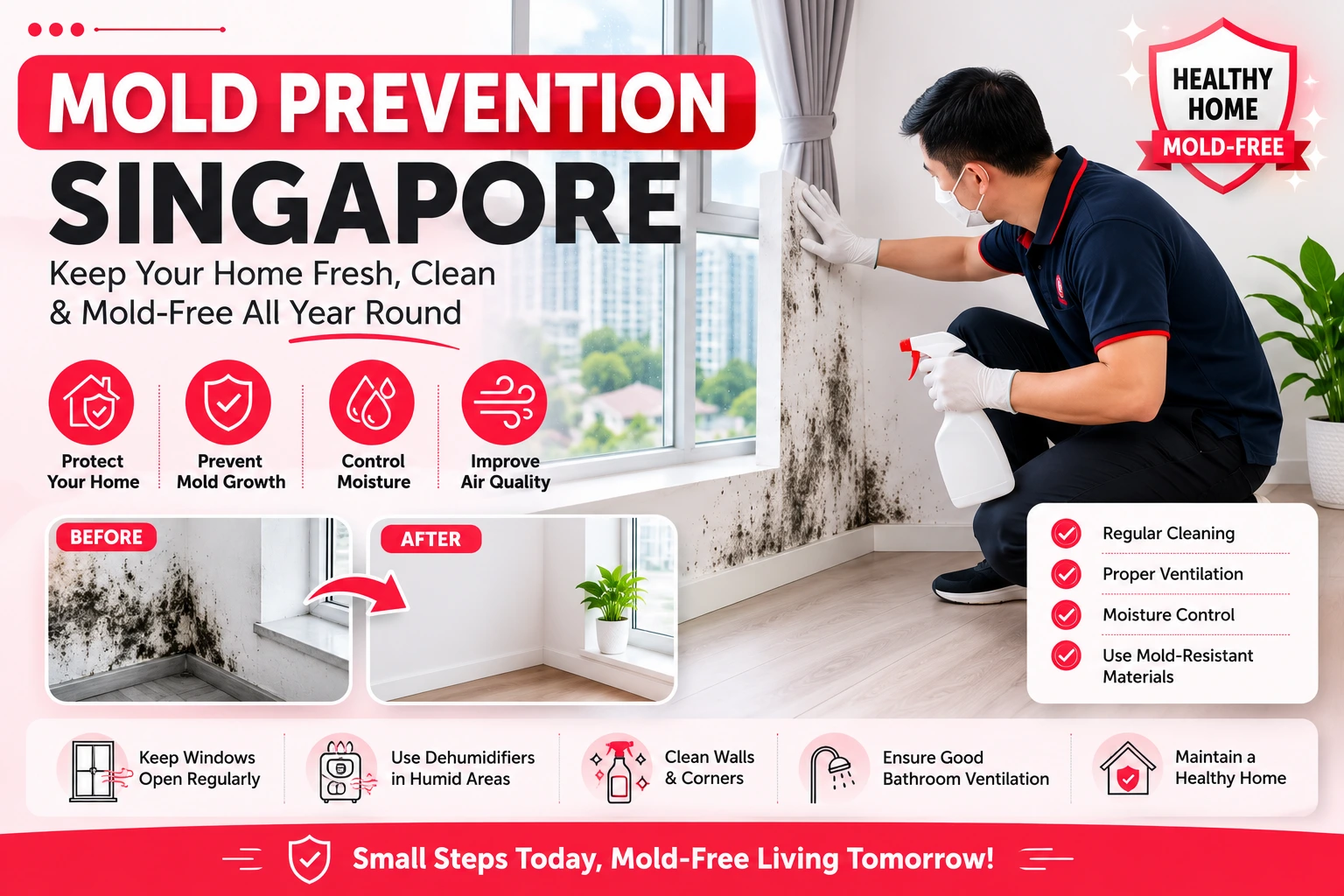
Mold Prevention Singapore: 12 Practical Tips to Keep Your Home Safe and Dry
Living in Singapore has many advantages, but the warm and humid climate comes with one common problem—mold. It can appear on walls, ceilings, furniture, wardrobes, and even clothes if moisture stays trapped for too long. That’s why mold prevention Singapore has become an important topic for homeowners, tenants, landlords, and business owners alike.
The good news? You don’t have to wait until mold becomes a serious issue. A few simple habits and regular maintenance can make a big difference. This guide shares practical mold prevention Singapore tips that are easy to follow and suitable for HDB flats, condominiums, landed homes, and offices.
1. Keep Indoor Humidity Under Control
Humidity is the biggest reason mold grows so quickly in Singapore. When indoor humidity stays above 60%, mold spores have the perfect environment to spread.
A hygrometer is a useful tool for checking humidity levels inside your home. Try to keep indoor humidity between 40% and 60%. This is one of the easiest and most effective mold prevention Singapore strategies you can follow every day.
If your home always feels damp, consider using a dehumidifier, especially during the rainy season.
2. Improve Air Circulation Every Day
Fresh air helps reduce moisture that gets trapped indoors.
Open your windows whenever the weather allows. Turn on ceiling fans or standing fans to improve airflow. If your home has limited ventilation, exhaust fans in bathrooms and kitchens can help remove humid air before it settles on walls and ceilings.
Many mold prevention Singapore experts recommend improving ventilation before spending money on expensive treatments.
3. Fix Water Leaks Immediately
Even a small leak can create the perfect place for mold to grow.
Check under sinks, behind washing machines, around air conditioners, and near water pipes. Roof leaks and cracked walls should also be repaired as soon as possible.
People often focus on cleaning visible mold while ignoring the real source of moisture. That usually means the mold comes back again.
For long-term mold prevention Singapore, fixing leaks is always a priority.
4. Dry Wet Areas Quickly
Bathrooms, kitchens, laundry rooms, and balconies stay wet longer than other parts of the house.
Wipe down shower walls after use. Dry bathroom floors instead of letting water sit for hours. Clean kitchen countertops and sinks regularly.
The faster you remove moisture, the lower the chance of mold developing.
This simple habit supports effective mold prevention Singapore without costing anything.
5. Clean Air Conditioner Filters Regularly
Air conditioners are used almost every day in Singapore. But dirty filters can trap moisture, dust, and mold spores.
Clean filters every few weeks, depending on usage. Schedule professional air conditioning servicing according to the manufacturer’s recommendations.
A clean cooling system improves indoor air quality while supporting better mold prevention Singapore throughout your home.
6. Don’t Push Furniture Against Walls
This is something many people overlook.
Large wardrobes, cabinets, and sofas placed tightly against walls can block airflow. Moisture gets trapped behind them, creating hidden mold patches that often remain unnoticed until they become serious.
Leave a small gap between furniture and walls to allow air to circulate freely.
It’s a small adjustment that supports better mold prevention Singapore over time.
7. Choose Mold-Resistant Paint
If you’re renovating or repainting your home, think ahead.
Many modern paints contain mold-resistant additives that slow down fungal growth in humid conditions. They’re especially useful for bathrooms, kitchens, laundry rooms, and walls exposed to condensation.
While no paint completely eliminates mold, it adds another layer of protection as part of a complete mold prevention Singapore plan.
8. Store Clothes and Belongings Properly
Closets can become damp very quickly, especially when packed with clothing.
Avoid storing damp clothes inside wardrobes. Use moisture absorbers or silica gel packs where necessary. Leave wardrobe doors open occasionally to improve ventilation.
These simple storage habits help reduce hidden mold while supporting reliable mold prevention Singapore for your personal belongings.
9. Keep Bathrooms Well Ventilated
Bathrooms produce large amounts of steam every day.
Run the exhaust fan during and after showers. Keep the bathroom door open when possible to help moisture escape. Wipe mirrors, tiles, and shower screens regularly.
Bathrooms are one of the most common places where mold prevention Singapore practices are needed because humidity remains high for long periods.
10. Inspect Hidden Areas Regularly
Not all mold grows where you can easily see it.
Look behind curtains, inside wardrobes, under sinks, behind refrigerators, and near windows every few weeks. Early detection makes cleaning much easier.
A quick inspection only takes a few minutes but can save expensive repair costs later.
That’s why regular inspections remain an important part of mold prevention Singapore.
11. Clean Small Mold Spots Safely
If you notice a tiny mold patch, deal with it early.
Wear gloves, improve ventilation, and clean affected surfaces using suitable cleaning products made for mold removal. Dry the area completely afterward.
If mold keeps returning or covers a large area, professional help is usually the better option because the moisture source may still be active.
Effective mold prevention Singapore always focuses on removing both the mold and the cause behind it.
12. Schedule Professional Mold Inspections When Needed
Sometimes mold hides inside walls, ceilings, or areas that are difficult to inspect.
Professional inspections can identify moisture problems before major damage happens. This is especially useful after water leaks, renovations, flooding, or when buying an older property.
Professional advice can strengthen your long-term mold prevention Singapore efforts and help protect your investment.
Why Mold Prevention Matters in Singapore
Singapore’s tropical climate creates ideal conditions for mold almost throughout the year. High humidity, regular rainfall, and warm temperatures allow mold spores to grow quickly whenever moisture is present.
Ignoring mold can affect furniture, walls, electronics, clothing, books, and indoor air quality. It may also trigger allergies or respiratory discomfort for some people.
That’s why mold prevention Singapore should be part of every home’s regular maintenance routine instead of being treated as an emergency after mold appears.
Conclusion
Keeping your property mold-free doesn’t require complicated routines. Small daily habits—like improving ventilation, controlling humidity, fixing leaks quickly, and cleaning damp areas—can make a huge difference over time.
The key to successful mold prevention Singapore is consistency. Prevent moisture from building up, inspect your home regularly, and act quickly whenever you notice early signs of mold. A little prevention today can save significant repair costs and create a cleaner, healthier indoor environment for your family.
Frequently Asked Questions
Why is mold so common in Singapore?
Singapore’s warm temperatures and consistently high humidity create perfect conditions for mold growth. Poor ventilation and hidden moisture make the problem even worse.
What is the best humidity level for mold prevention Singapore?
Most experts recommend keeping indoor humidity between 40% and 60% to reduce the risk of mold growth.
Can air conditioners help with mold prevention Singapore?
Yes. Air conditioners reduce indoor humidity, but they should be cleaned and serviced regularly to prevent mold from developing inside the system.
How often should I inspect my home for mold?
A quick inspection every few weeks is usually enough. Pay close attention to bathrooms, kitchens, wardrobes, windows, and areas with plumbing.
When should I hire a professional for mold prevention Singapore?
If mold covers a large area, keeps returning after cleaning, or appears after water damage, professional inspection and treatment are recommended to identify and fix the root cause.