
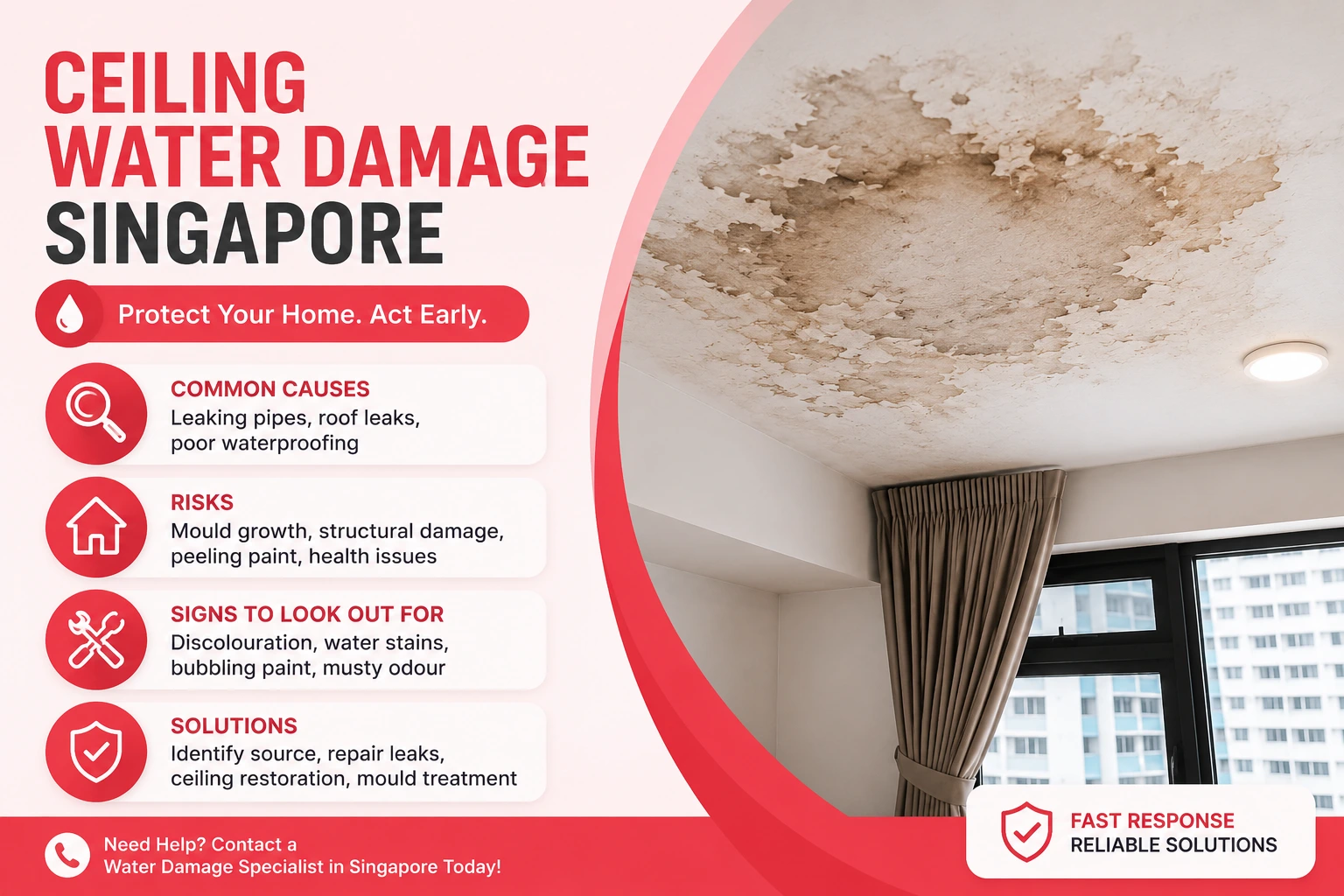
Ceiling Water Damage Singapore: 10 Essential Facts Every Homeowner Should Know
A small brown stain on the ceiling might not seem like a big deal at first. Many homeowners ignore it, hoping it will disappear on its own. But here’s the truth—it rarely does. What starts as a tiny patch can slowly become a much bigger problem, affecting your ceiling, walls, paint, electrical wiring, and even your family’s safety.
If you’re dealing with ceiling water damage Singapore, acting early can save thousands of dollars in repairs. Singapore’s tropical climate, heavy rainfall, high humidity, and aging buildings make ceiling leaks surprisingly common. Whether you live in an HDB flat, condominium, or landed property, understanding the causes behind ceiling water damage Singapore issues and knowing how to respond can make all the difference.
Ignoring early warning signs can lead to expensive repairs, structural concerns, and long-term maintenance problems. Proper inspection and timely solutions are essential for protecting your home from ceiling water damage Singapore and preventing further damage.
Let’s explore everything you should know before that small stain turns into a major renovation project.
1. Water Stains Are Usually Just the Beginning
Many people think ceiling stains are only cosmetic. Unfortunately, that’s rarely true.
Water stains usually indicate moisture has already entered the ceiling structure. By the time you notice discoloration, water may have been leaking for days or even weeks. If left unchecked, ceiling water damage Singapore issues can worsen and lead to more serious structural problems.
Common signs include:
- Yellow or brown stains
- Peeling paint
- Bubbling plaster
- Sagging ceiling panels
- Damp patches
- Musty smells
The sooner you investigate ceiling water damage Singapore, the easier—and cheaper—the repair usually becomes.
2. Heavy Rain Isn’t Always the Main Cause
Singapore experiences frequent rainstorms, but rainfall isn’t always responsible.
Other common causes include:
- Roof leaks
- Burst water pipes
- Bathroom waterproofing failure
- Air-conditioning condensation
- Plumbing leaks
- Overflowing water tanks
- Cracked waterproof membranes
- Faulty drainage systems
Sometimes the leak actually comes from the unit above, making the source harder to identify.
That’s why professional ceiling leak repair often starts with proper leak detection instead of immediate repairs.
3. HDB Flats Often Experience Ceiling Leaks from Upstairs
This surprises many homeowners.
If you live in an HDB apartment, the water damage may not even originate from your own home. In many cases, ceiling water damage singapore homeowners experience is caused by issues from an upper-floor unit rather than their own property.
Bathroom waterproofing in the upper unit can deteriorate over time. Water slowly seeps through the concrete slab until stains appear on the lower unit’s ceiling.
This type of water leakage Singapore often requires cooperation between neighbors to identify and fix the actual source. Addressing ceiling water damage singapore problems early can help prevent further structural damage and costly repairs.
Ignoring the issue rarely helps.
4. Small Leaks Can Lead to Expensive Structural Damage
Water is patient.
It slowly weakens building materials over time.
If moisture continues entering the ceiling, you could face:
- Mold growth
- Damaged insulation
- Rusted reinforcement bars
- Concrete spalling
- Electrical hazards
- Ceiling collapse in severe cases
The repair costs increase significantly once structural damage begins.
That’s why experts always recommend fixing moisture problems as soon as possible instead of waiting.
5. Mold Can Develop Faster Than Most People Think
Singapore’s humidity creates ideal conditions for mold.
Sometimes mold starts growing within just 24 to 48 hours after water intrusion.
Signs include:
- Black spots
- Green patches
- White fuzzy growth
- Persistent musty odor
Besides damaging your home, mold may trigger allergies, asthma, coughing, headaches, and respiratory irritation.
Addressing both the leak and the mold is essential for complete ceiling water damage Singapore restoration.
6. DIY Repairs Don’t Always Solve the Real Problem
It’s tempting.
Buy some paint.
Cover the stain.
Hope for the best.
But… cosmetic repairs only hide the symptoms.
Without fixing the actual leak, water continues damaging the ceiling underneath.
Many homeowners also apply sealants without identifying where water is entering.
Professional inspections usually include:
- Moisture testing
- Leak detection
- Plumbing inspection
- Roof assessment
- Waterproofing evaluation
- Ceiling condition assessment
Finding the source is always more important than hiding the stain.
7. Professional Repairs Usually Follow Several Steps
Repairing water-damaged ceilings isn’t just patching holes.
A proper process often includes:
Locate the Leak
Technicians first identify where water enters the property.
Stop the Water Source
Whether it’s plumbing, roofing, or waterproofing, the leak must be repaired before anything else.
Dry the Area
Industrial drying equipment removes trapped moisture from the ceiling.
Remove Damaged Materials
Loose plaster, peeling paint, damaged gypsum board, or weakened ceiling sections are removed safely.
Repair and Restore
The ceiling is repaired, skim-coated, sanded, primed, and repainted to match the surrounding surface.
Some projects also require ceiling repair Singapore, roof waterproofing Singapore, or waterproofing contractor Singapore services.
8. Prevention Is Much Easier Than Restoration
Nobody wants emergency repairs.
Fortunately, regular maintenance helps reduce the risk of costly issues like ceiling water damage singapore. Simple preventive steps can help protect your home and avoid unexpected repair expenses.
Simple habits include:
- Inspect ceilings every few months
- Check bathrooms for leaking grout
- Maintain roofing systems
- Clean roof gutters
- Service air-conditioning units
- Repair plumbing leaks immediately
- Monitor water pressure
- Schedule regular building inspections
These small efforts often prevent major ceiling water damage singapore problems and other home maintenance expenses later.
9. Insurance May Cover Certain Types of Water Damage
Many homeowners don’t realize this.
Some home insurance policies cover sudden water damage caused by burst pipes or accidental plumbing failures. However, when dealing with ceiling water damage singapore, it is important to understand that gradual deterioration, poor maintenance, or neglected leaks may not be covered.
Before starting major repairs related to ceiling water damage singapore, homeowners should take the right steps to support their insurance claim:
- Review your insurance policy
- Take photographs
- Document visible damage
- Keep repair estimates
- Report the issue promptly
This documentation can make the claims process much smoother and help ensure you have the necessary evidence when discussing your water damage claim with your insurer.
10. Choosing Experienced Repair Specialists Matters
Not every contractor specializes in water damage.
A reliable company should understand:
- Leak detection
- Waterproofing systems
- Ceiling restoration
- Mold treatment
- Structural repairs
- Moisture management
Experienced professionals don’t just repair visible damage—they solve the root cause so the problem doesn’t return a few months later.
That’s something every homeowner appreciates.
Conclusion
Dealing with ceiling water damage Singapore can feel stressful, especially when the damage appears unexpectedly. But the good news is that most problems can be managed effectively when they’re caught early. A small stain, peeling paint, or damp ceiling should never be ignored because these signs often point to a hidden leak that’s quietly causing more damage behind the scenes. Whether the issue comes from heavy rain, plumbing leaks, faulty waterproofing, or an upstairs neighbor, identifying the source is the first step toward a lasting solution.
Regular inspections, timely repairs, and proper maintenance go a long way in protecting your property. If you notice early warning signs of ceiling water damage Singapore, taking quick action can help prevent costly repairs and structural issues. When professional help is needed, choosing experienced specialists ensures your ceiling stays safe, dry, and looking its best for years to come.
Frequently Asked Questions
1. What causes ceiling water damage in Singapore?
Common causes include roof leaks, plumbing problems, damaged waterproofing, air-conditioner condensation, bathroom leaks, burst pipes, and heavy rainfall.
2. Can I repair ceiling water damage myself?
You can repaint minor stains after the leak is fixed, but identifying and repairing the actual source usually requires professional inspection.
3. How much does ceiling water damage repair cost in Singapore?
The cost depends on the severity of the damage, repair materials, leak source, and whether waterproofing or structural repairs are required.
4. Is ceiling water damage dangerous?
Yes. Prolonged water damage can weaken ceilings, cause mold growth, damage electrical wiring, and increase repair costs if left untreated.
5. How can I prevent ceiling water damage?
Regular roof inspections, plumbing maintenance, waterproofing checks, air-conditioner servicing, and fixing small leaks immediately are the best preventive measures.
6. Does homeowners insurance cover ceiling water damage?
Some insurance policies cover sudden accidental water damage, but gradual deterioration or poor maintenance may not be included. Always check your policy details.